Our Bio-CNG project transforms agricultural waste into clean fuel using advanced anaerobic digestion technology, promoting sustainable energy and rural development.
🌱 About Us
Satyabhaa Green Energies Pvt. Ltd., based in Visakhapatnam, Andhra Pradesh, is a renewable energy and infrastructure company developing Bio-CNG projects that convert agricultural biomass such as Napier grass, cow dung, and organic waste into clean fuel, supporting sustainable energy, waste management, and rural economic growth.
0+
Completed Projects
Satyabhaa Green Energies Pvt. Ltd. has successfully completed multiple civil infrastructure and agricultural projects, building a strong foundation for its expansion into renewable energy and Bio-CNG.
Our vision
To be a nationally recognized organization that leads with values, delivers with integrity, and innovates for a cleaner and greener future.
Our mission
To deliver reliable infrastructure and sustainable energy solutions while fostering local employment, promoting organic methods, and reducing dependence on fossil fuels.
The company is developing a Bio-CNG plant that converts agricultural biomass and organic waste into clean, sustainable fuel.
Government support (SATAT)
The project supports the Government of India’s SATAT initiative promoting Bio-CNG plants with policy support and incentives.
Financial viability
A financially viable project supported by subsidies, stable pricing, and growing Bio-CNG demand.
Environmental impact
Growing energy demand and fossil fuel dependence create strong market opportunities for Bio-CNG.
Market opportunity
The project reduces emissions, manages agricultural waste efficiently, and produces organic fertilizer.
🌱 Our Projects
Proven solar solutions across every sector
Technology & Production
The plant uses advanced anaerobic digestion with CSTR technology to convert organic biomass into biogas, which is then purified and upgraded into high-quality Bio-CNG for transportation and industrial use.
The Bio-CNG project promotes clean energy by converting agricultural waste into fuel, reducing emissions, and generating organic fertilizer while supporting rural employment and farmer income.
Capacity
15 TPD Bio-CNG Plant
Industry
Renewable Energy & Bio-CNG Production
Location
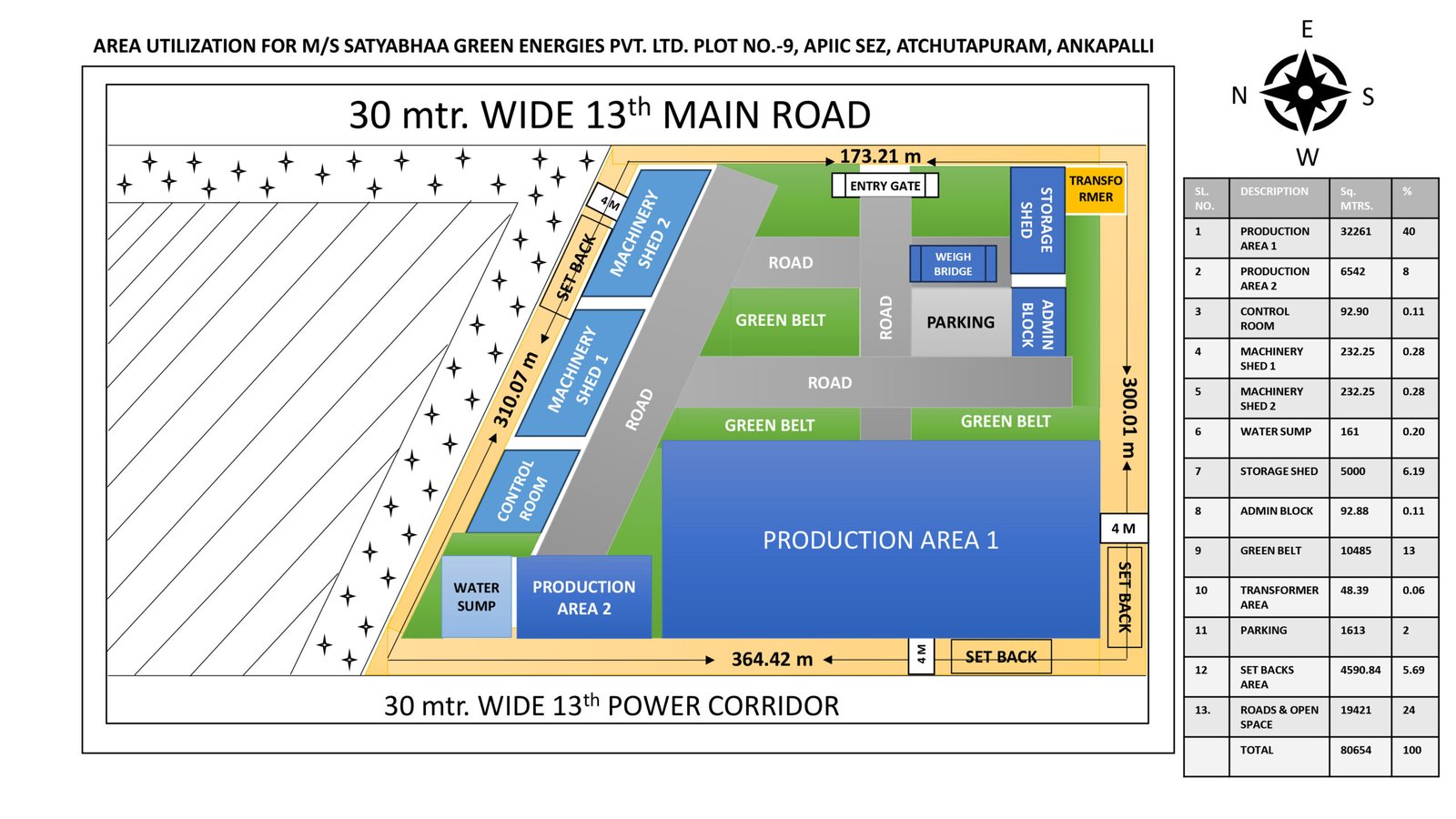
Atchutapuram APIIC SEZ
Have more any questions?
about Bio-CNG energy
🌱 Have Questions
Frequently Asked Questions about Bio-CNG Energy
What is Bio-CNG and how is it produced?
Bio-CNG is a renewable fuel made from agricultural biomass through anaerobic digestion and purified for transport and industrial use.
What raw materials are used in the Bio-CNG plant?
The plant uses agricultural biomass including Napier grass, agricultural residue, and cattle dung as feedstock to produce biogas, which is upgraded to Bio-CNG.
What is the capacity of the Bio-CNG plant?
The proposed plant has a production capacity of 15 tons of Bio-CNG per day, converting organic biomass into clean and sustainable fuel.
What are the environmental benefits of Bio-CNG?
Bio-CNG helps reduce greenhouse gas emissions, prevents agricultural waste burning, and promotes sustainable waste management while producing organic fertilizer as a by-product.
How does the project benefit farmers?
Farmers can supply biomass such as Napier grass and agricultural residue to the plant, creating an additional income source and supporting rural employment.